

RomCrime
The SVU shaped HEA's and the women who birthed them

“And then he…” her voice trailed off as she began to mime what she couldn’t bring herself to say.
“Oh yeah, the one where he fucks her with the gun.” I filled in as my friend’s face flushed in embarrassment. A nod in my direction the sole affirmation we were talking about the same novel.
It was a surprisingly warm Autumn night (climate change anyone?) as we sat at her dining room table catching up over dinner. We hadn’t seen each other in close to a year as circumstances dragged our lives in different directions. The last time we were together, she’d just gotten back into reading, and had yet to develop a taste for the kinds of stories she was attempting to conceal her excitement about.
We ended up discussing Haunting Adeline1 by H.D Carlton, the book she’d recently finished and one of the most popular in the dark romance genre, by far. Her interest came as no surprise to me, this is the same friend who called Fifty Shades of Grey “disgusting” at a girl’s night before admitting to owning the trilogy and loving it to me, in private. And though I have feelings about the way her shame causes her to project repulsion and yuck other people’s yums, I hear her out cause sometimes, you gotta be the openly perverted padded floor for your prudish friends to land on.
Most of my interests rest snugly between the erotic and the macabre and I make no attempts to hide that. If it’s psycho-sexual and depraved, the majority of the time, I’m all for it. My friend knows this about me which is why she opened the floor to discuss these stories thinking she’d find a comrade and though I was receptive to the conversation, I had no vested interest beyond my curiosity about her experience reading it. This was a bit baffling to her, my indifference and her confusion at my lack of interest compelled me to explain,
“I’m not shitting on it or anything, I can see the appeal for certain people. I’m just not the audience and honestly, the stories have always been like this— doesn’t feel as novel as we act like it is. But please, you said something about a chase…?”
Our conversation went on, the night progressed and for days after, I thought about dark romance. An easy task considering how often people talk about it, the market for these titles are booming2. Like many publishing trends in the last half decade, dark romance’s insurgence as the romantic subgenre was spawned via TikTok, #BookTok, to be specific. The earliest article I could find noting dark romance as it’s own unique subgenre with roots in TikTok, dates back to 2023 and was published by Paste Magazine, What is Dark Romance and Why is BookTok Obsessed With It?.
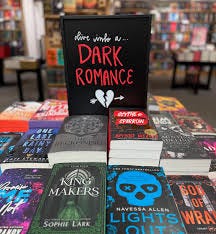
The writer gives a primer on its roots, how romantasy3, another recently coveted subgenre had made room for more tales of strapping male leads with elusive origins and morally duplicitous methods to getting what they want. The kind of stories where (oftentimes) pathologically vulnerable human FMC4’s are caught up in the politics and desires of oversized creatures re-imagined from childhood fantasies: elves and aliens, warlocks and necromancers of a hidden realm. In some regard, the single distinction between romantasy and dark romance is the absence of magic in the latter.
For many subgenres, dark romance, erotic horror5, romantasy, etc., the similarities they share cannot be helped because they’re all links in a centuries old chain. Perhaps these stories don’t move me because I’m too aware they’re not made for me, because like most modern romance media, these stories are distilled colonial captivity fantasies, white women’s colonial fantasies to be exact.
Whether shrouded in flowery language or offered plainly on page, the through line is clear. A waif of a woman who’s young, white (or light) and positively no match for the MMC whose cruelty she’ll learn to temper with care, if she doesn’t choose to just fully embrace it. Her agency is limited to access afforded by the men in her life, she has no privacy outside of her thoughts and succumbs to obsessive control, love, with all the grace of a saint.
A good girl with limited choices in life who falls in love with a bad man so who can really blame her? I know that story, we all do. It’s been the resounding narrative since the colonial era began, a liminal space where white women have obfuscated culpability with ease as they occupy the seat of the feminine [read: vulnerable and helpless in this context] with the armor of White Supremacy. Her dis-empowerment treated as permanent and all encompassing, colored by race as passively as possible and shared amongst all woman, a rather inclusive lie.
This isn’t to say white women experience no gendered hardship at all. Sexism, misogyny and patriarchy are proliferated through all layers of society and its co-conspirators transcend class, ability and gender, but once we account for race, and the sheer power commandeered under the scope of White Supremacy, the hardships of women become a more fungible entity than white women know how to reconcile with as a group. Simplifying complex relations in society to 1:1 power (in)balances that assert that somehow, gender can bridge the gap of racial power, treated as some double negative when confronted with variations less clear than their comfort would prefer.
This reframe isn’t accidental but rather historic, a bedrock used to justify cruelty and exacting violence on plantations, in fields and beyond imperial conquest. The belief that white women’s victimhood is so omnipresent, it can be equally exploited by any man, anyone really and anytime, is what provides cover from the arduous effort they put into maintaining and expanding the order white men have fallen on the sword for time and time again. It fully dismisses a starker truth that oftentimes, white women are as, if not more invested in colonial projects than their male counterparts. I spoke to this reality as it relates to current attacks on civil liberties and the rights of the marginalized in essays past, where I examined just how many efforts are explicitly spearheaded by women aware of the privileges their perceived fragility affords them.
The cultural is political after all, meaning we can’t disseminate ideals of romance, courtship and love from the group holding the power to shape such narratives in a way that benefits their agenda. At the heart of the genre are stories meant to sweep our attentions away from the political backdrop coloring these relationships while strengthening ideals of romance that serve few of us in the long run.
The Flame and the Flower by Kathleen Woodiwiss6, lauded as the first modern bodice ripper7 centers an orphan who’s abducted by a sea captain set on sailing to the colonies after surviving an attempted assault by another man. Gone With The Wind8 by Margaret Mitchell was the top selling fiction novel in the country in 1936 & 1937, the same year Mitchell would win the Pulitzer Prize for Fiction for this work. The novel, later adapted to film, stars Scarlett O’Hara, a Georgian southern belle and eldest daughter of a wealthy plantation owner coming of age amidst the American Civil War. It’s the fourth9 most best-selling romance novel of all time.
They follow a similar narrative, gorgeous young women making a way with their wits, beauty and modesty, ingenues whose presence soften the world they exist within, making it easier to forget they have power still and exercise it without provocation. The same women who cashed in on public ignorance of the true scope of their involvement in the slave trade while alongside white men, peddling myths of gentle, empathetic mistresses and misses sexually besieged by enslaved Black men who despite enduring a constant specter of violence, supposedly took great risks to frequently ravage local white women, slave holding white women.
Around 40% of white women10 at the height of slavery in the Antebellum South were slave holding and listed as buyers/sellers on bill of sales for enslaved people. This is discussed extensively in They Were Her Property by Stephanie E. Jones-Rogers11, an investigative historical analysis that completely disrupts the myth of white female passivity as it relates to the transatlantic slave trade. The premium way white women (and by virtue of colonization, women of color), have learned to justify their desire and appetite for both sex and power is through crafting stories that arrest them of all agency and choice where any pleasure derived from certain acts is essentially, a betrayal of the body. A confused form. If the guardrails of womanhood and femininity don’t allow for active desire, than it must be introduced externally, a violent consumption that leads to a rapturous end.
If we place white womanhood into its earliest context, a valorized female form whose youth and modesty required violent maintenance by white men, then we understand how these hardly believable tales became the baseline understanding of racialized gender and sex. It’s easier to believe that white women lay asleep in the home, or camp or battlefront cocooned in ignorance of the world she lives in until she’s imposed upon by some brutish man belonging to an established underclass than the less polite truth which is: white women are capable of great thought and beliefs just like everyone else, meaning white women can be as bigoted, perverse and immoral as anyone else.
[I’d argue some of their violently voyeuristic inklings were diffused into the creation of the true crime craze that has swept women into its storm for decades now but that’s an entirely separate essay.]
In these stories, authors who are primarily white12 continuously sidestep the gravity of the decisions they have their heroines make to build a case for ignorance their heroines don’t actually display. Scarlett O’Hara raises money for the Confederacy multiple times in Gone With The Wind and marries a man who grew his riches off the war and fought for the South in it. Heather Simmons, the heroine of The Flame and the Flower, marries Brandon Birmingham who owns a plantation in South Carolina, where he runs a cotton mill. These women are presented as savvy enough to survive in the worst of odds and excel with the support of a loving man but somehow, are rendered feckless in the face of injustices they enabled and/or funded against other people.
The first film screened in the white house was Birth of a Nation13, a KKK recruitment film that depicted white men in blackface14 rampaging southern white communities post civil war with intent to rape and pillage their young as retribution. The klansmen are presented as literal white knights, galloping in on horseback to save the day donning hoods sewn by the very women they framed as sitting ducks in need of protection. At some point in the film, these women are captured riding alongside and in front of these men, there’s a lesson in that.
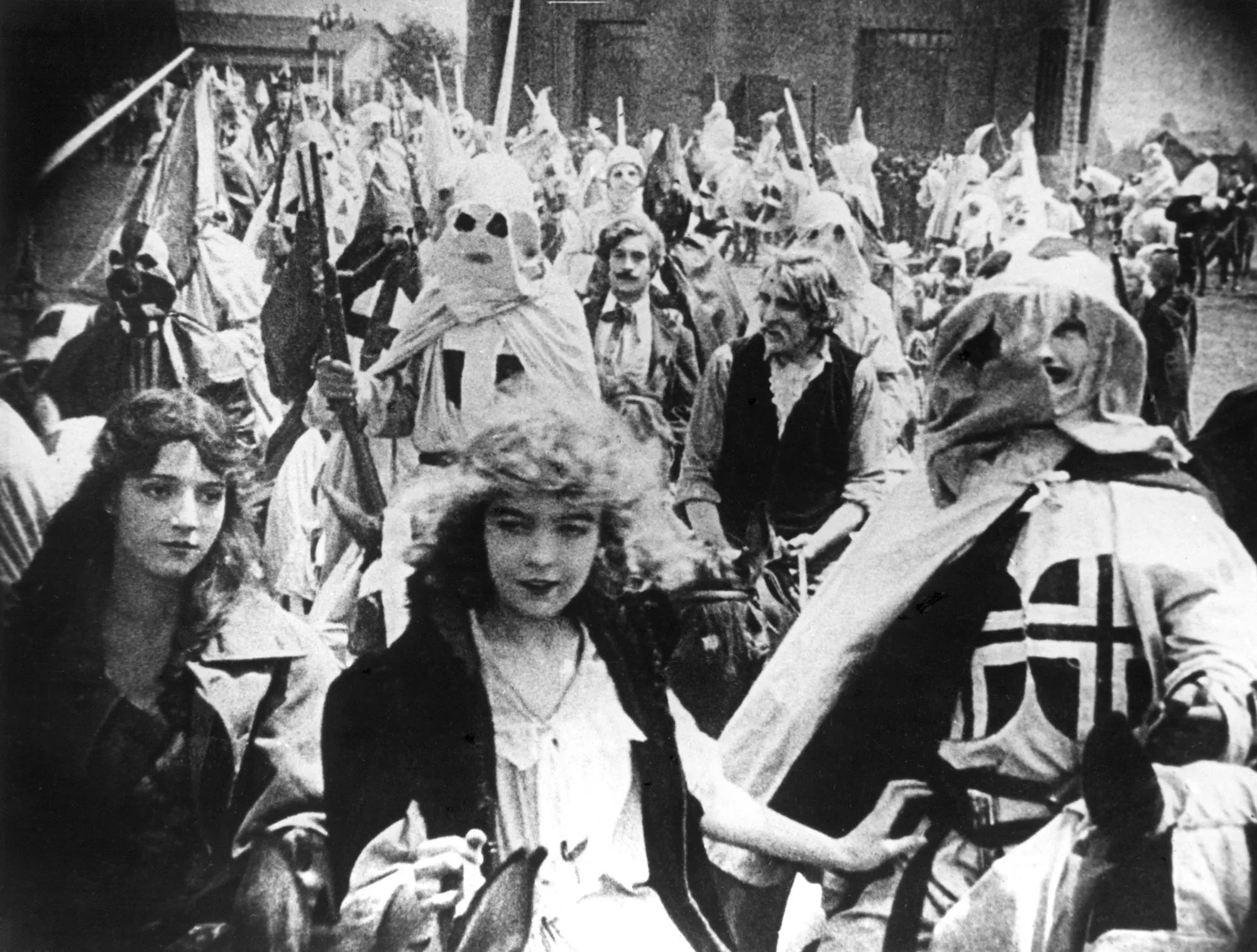
When I glance at the romance genre’s legacy in the US especially, I see waves of titles delicately walking a tightrope that allows them to engage with gender and cruelties unique to sexism while concealing their heroines capability of producing lateral violence towards other women or institutional violence towards people (namely men) of color. Whatever spunk and tenacity these FMC’s have is defunct outside of relations with her man, as that’s what the plot (and colonial gender rules) allow.
This… re imagining of the function of the white female experience while simultaneously ignoring its legacy, explains the friction we see when aged romance media is revamped for contemporary audiences with more diverse cast.
I think frequently of the icy reception Regé Jean Page15 received when it was announced he’d be joining the cast of Bridgerton as Simon Basset, the Duke of Hastings, the most desirable bachelor in the first installment of a regency romance series written by Julia Quinn. Book fans made their displeasure at his casting well known, flooding social media to scold Netflix, Shondaland (the executive producers of Bridgerton) and Julia Quinn herself as well as creating #NotMyDuke16, a hashtag filled with openly racist protestations at the race bending the show had taken on. The love story fans so desperately wanted to preserve in all its white glory includes a pregnancy born of marital rape after Daphne, the female protagonist, mounts a drunk, barely conscious Simon and forces him to finish inside her, as he tries to bat her off and reject her advances. What a gem she was.
Many of these stories are deeply problematic and their dubious content is written off as the human desire to reconcile with a convoluted society rife with inequality. We tell the stories to cope with the reality, a sentiment I could understand if awareness of the reality were present and if it is, I fail to see it. Some of my favorite genres excel at presenting these conflicts adeptly. Gothic horror, speculative fiction and sci-fi, to name a few, all engage with the seedier parts of life, and ask us to lean into the discomfort we experience in their worlds. The mortal flaw of romance time and time again is the refusal by the culture, the consumers and dare I say, the authors themselves, to take romance seriously. I imagine the hesitation to assert romance as a genre worthy of critique and prestige like the others comes from the knowledge that taking romance seriously means changing how we engage with stories about love altogether and I think that’s more inconceivable than anything.
Taking a look at any best rom-coms of all time list makes it abundantly clear that the zeitgeist may have abandoned the parasols, dowries and lack of women’s suffrage of earlier days but the sentiments have remained the same. Deception, wacky hijinks and meddlesome family and friends accompany us on a runtime where all is fair in love and war, even crimes! You know what they don’t say, one woman’s fairy tale is another’s police report.
Of the 10 highest grossing rom-coms of all time17, only one leaves me hopeful about love, companionship and romance, which is ironic considering said film’s premise is built around the discerning yet lucrative business of a pick up artist. Shoutout to Hitch. The rest involved layers of betrayal, stealthing and other sex crimes, as well as overbearing patriarchs reluctantly handing over their adult daughters with all the grace of an angry bull. The women are hypercritical and Type A, too neurotic to get out of their own way or flighty and disaffected maneaters in need of humbling while the men are simply too comfortable with bachelorhood to settle down or absolute losers who refuse to take no for an answer and are ultimately rewarded for their persistence. Literacy in the origin of these modernized colonial fantasies doesn’t require daily admonishment of its descendants but rather, at minimum, awareness.
The Bookworm and the Jock. The Mafioso and the Waitress. The Debutante and the Rake. The Mistress and the Bull. The Housewife and the Pool Boy. The Pop Star and the Bodyguard. We go ‘round and ‘round, replicating the same ideals expecting wisdom and encountering confusion instead.
If you pay attention long enough, the contradictions start to feel formulaic and intentional in the same vein the tales of conquered white women on the frontier, plantation or battlefront persisted. A deflection and way to keep the sexes (and other groups) at odds with each other as they’re misled about what to find healthy or aspirational in partnership. How could we ever truly decolonize our minds when the stories we escape into rest firmly in our oppressors imagination? Divestment from these narratives goes beyond the interpersonal, it’s cultural and the inheritance we leave the world.
If we’re being honest, the refusal to abandon the tropes and stories that built our cultural memory of romance continues because beginning anew requires courage and curiosity about humanity and the ways we make each other feel. An insistence that we might not know shit and our predecessors didn’t leave much for us to work with. That what is broken today can be whole tomorrow.
I think love, like any worthy endeavor, assumes risks and we’re in a highly risk averse time where people are endeared to assurances love simply can’t make. It’s why we see the rabid reinvestment in the beauty capital, desirability politics and broad sweeping adoption of incel logic on/offline in an attempt to insure these coveted relationships go the distance. Tell the Bees wrote a great piece about this.
We deserve better romance because things that inspire us to great emotion should be treated with care and explored to its furthest extent. I’ve never once had to ask myself "how much worse can it get?” when discussing pursuits of love and romance because we’ve asked and answered that question tenfold. Dark romance and the other subgenres supporting romance and the publishing industry, writ large freely engage with the worst however sexy it’s presented, it’s its singular appeal to consumers. I have however, found myself asking “how good could love get?” “what’s possible when we care to learn each other?” and found fewer references to seek insight from, more uncharted ground.
The playbook is warped, pages have yellowed from age, some stuck together and missing from the book entirely. It served its masters and if we want them to truly perish, we have to retire their playbook and come up with a new one. In order to do that though, we must reconsider what’s survived the colonial era with a critical lens, ask why and how best to cast it out of society, romantic ideals included.
Despite the tone of this essay, you must know I remain hopeful for what could be. People are educating themselves daily about the horrors of colonization, making it easier to connect the cultural dots. Women are choosing not to mindlessly commiserate with discontent wives whose husbands openly hate them on the internet as if it’s relatable and thus, immutable anymore. (Of course I read that article in The Cut and you can right here.) The questioning is slow going but it’s happening.
I long for us collectively, to bore of nostalgia and claim a page in a fresh book full of possibilities, without blushing dames and brooding alphas and colonial backdrops looming in the distance. I don’t profess to know the recipe for a great love story but I imagine it includes laughter, emotional stability, profound intimacy, and all the orgasms a girl could want, then one more, just in case. And I reckon, that’s as good a place to start as any.
It’s been a while since I’ve had a full essay to share. Life’s been hectic, I’m not alone in that and I hope everyone is taking care of themselves and each other as best they can, considering. The writing bug hit me pretty hard so expect more essays and vignettes soon.
Take Care,
Nia Òla
https://www.goodreads.com/book/show/58763686-haunting-adeline
https://publishingperspectives.com/2025/06/circana-cites-dark-romance-in-growing-us-market-sway/
https://reedsy.com/blog/what-is-romantasy/
FMC is an abbreviation of Female Main Character, frequently used in publishing
https://en.wikipedia.org/wiki/Erotic_horror
https://bookshop.org/p/books/the-flame-and-the-flower-kathleen-e-woodiwiss/2f6475b8abe0c0e4?ean=9780380005253&next=t
https://www.merriam-webster.com/dictionary/bodice%20ripper
https://bookshop.org/p/books/gone-with-the-wind-margaret-mitchell/a6df22a7e031ca64?ean=9781451635621&next=t
https://romancewritershq.com/blog/deep-dive-unstoppable-rise-romance-genre-novel-statistics-to-prove-it
https://en.wikipedia.org/wiki/They_Were_Her_Property
https://www.stephaniejonesrogers.com/book
https://www.therippedbodice.com/state-racial-diversity-romance-publishing-report
https://www.gilderlehrman.org/history-resources/teacher-resources/historical-context-birth-nation
https://nmaahc.si.edu/explore/stories/blackface-birth-american-stereotype
https://www.theguardian.com/tv-and-radio/article/2024/jul/11/sorry-we-dont-want-lesbians-bridgertons-problem-with-racism-homophobia-and-body-shaming
https://www.fansplaining.com/articles/bridgerton-period-drama-fandoms-racism
https://www.imdb.com/list/ls004066533/
this article is so good it made me redownload substack so I could like and comment on it ❤️👌
thank you for so eloquently putting into words why I have always pushed back against romantasy, dark romance and true crime fetishizing without even realizing why since it has always felt ick and this is exactly why! The roots in colonialism and patriarchy are so all the way ingrained and the way white women especially just accept it is so sad and gross.
also tmi but recently I discovered t4t romance and it changed my life. Straight white people have ruined sex for all of us 😭
"sometimes, you gotta be the openly perverted padded floor for your prudish friends to land on." I've made it my mission to be that friend and it's a nice place to be.
The dark romance trend is also just another symptom of the literacy crisis imo. People read stories that are predictable, boring and just will not challenge them much. Sometimes that's what you need, because *gestures at the world*, but that cannot be the only thing you consume. I'm glad you reminded us that these tropes are born out the same white patriarcal hellscape we're all forced to live in. Once you're aware of that you cannot look at them the same. I know you didn't ask for suggestions but a great romance I've read these past few years sis "You made a fool of death with your beauty" by Akweake Emezi. It's really good and the girls are still tussling about the ending!